The encounter on the mountain
Prayer, glory and the conversation
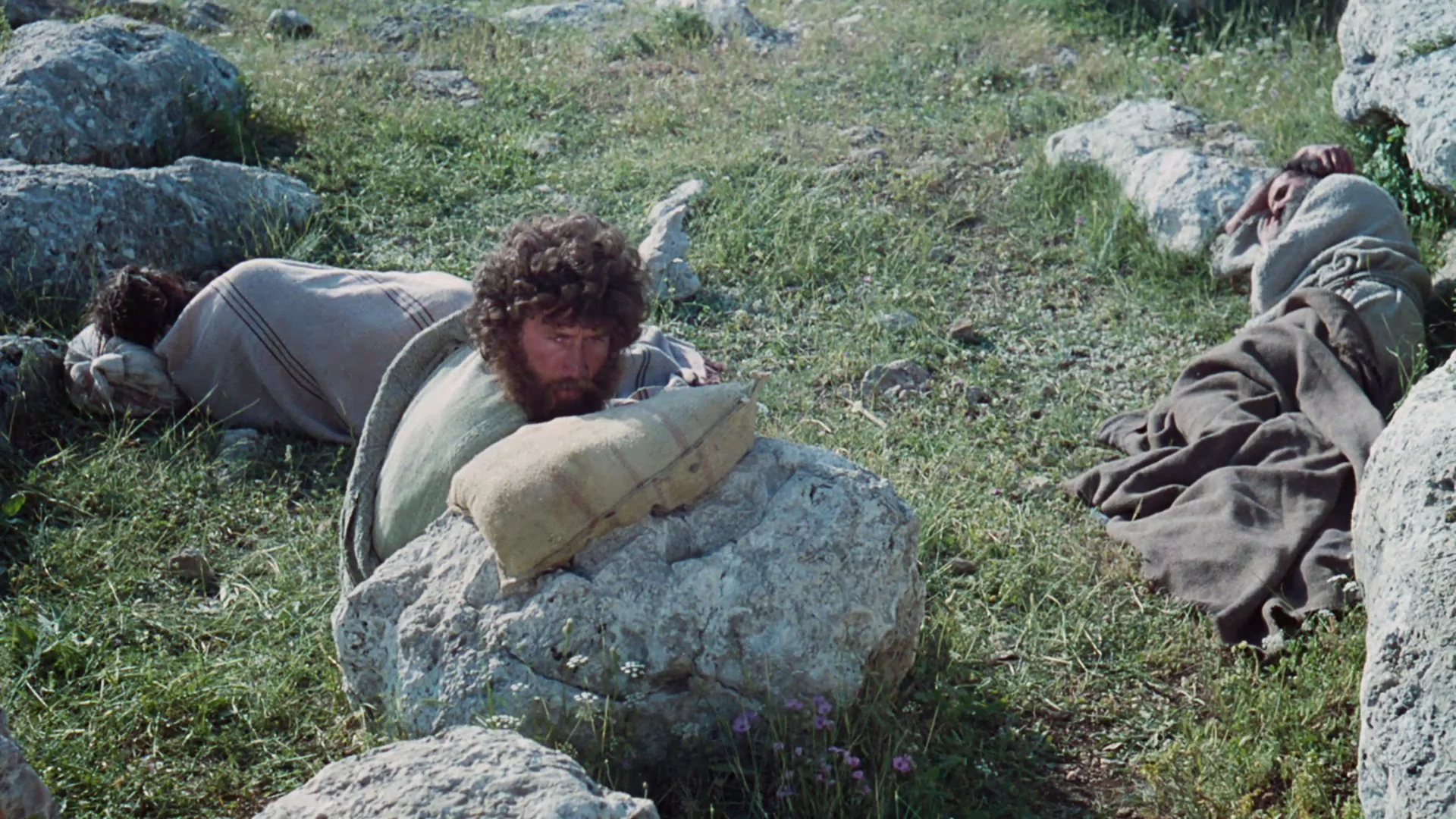
Luke records that Jesus took Peter, John and James onto a mountain to pray. During his prayer, the appearance of his face changed, and his clothes became as bright as a flash of lightning. This change in outward appearance is what “transfiguration” means. Peter and his companions were very sleepy; when fully awake, they saw Jesus' glory and two men standing with him (Luke 9:28–32). [1]
The two men were Moses and Elijah, who appeared in glorious splendor. Their conversation concerned Jesus' departure, which he was about to accomplish at Jerusalem (Luke 9:30–31). The subject of their meeting was therefore not only the glory the disciples witnessed: they spoke about his approaching death. [1]
One Christian interpretation understands Moses as representing the Law and Elijah as representing the Prophets, with Jesus fulfilling both. In this understanding, Jesus' radiance expresses his divine glory. These are explanations of the encounter's significance; Luke's account identifies the visitors and records what they discussed (Luke 9:30–31).
Peter's shelters and the Father's voice
As Moses and Elijah were leaving, Peter proposed three shelters: one for Jesus, one for Moses and one for Elijah. Luke adds that Peter did not know what he was saying. While Peter was still speaking, a cloud covered them, and they were afraid as they entered it (Luke 9:33–34). The account records Peter's proposal without presenting it as an instruction Jesus gave the disciples. [1]
A voice from the cloud said, “This is my Son, whom I have chosen; listen to him.” Christians understand this as God the Father affirming Jesus before these disciples. The declaration identifies Jesus as his Son and gives the listeners a direct command: listen to him (Luke 9:35). [1]
When the voice had spoken, the disciples found Jesus alone. Luke ends the episode by recording that they kept the experience to themselves and did not tell anyone at that time what they had seen (Luke 9:36). [1]