Command, compassion and identity
Luke records Jesus falling asleep during a lake crossing, then being awakened by disciples facing a dangerous storm. He rebukes the wind and waves, and calm follows. His question about their faith is followed by their own question about his identity: even wind and water obey him (Luke 8:22–25). Christians understand this command over creation as an expression of his divine authority.
Authority over illness appears in personal encounters as well as crowded scenes. Luke records Jesus rebuking the fever of Simon's mother-in-law; it leaves her, and she immediately gets up and serves them (Luke 4:38–39). Later, people bring those with various illnesses, and Jesus lays his hands on each one and heals them (Luke 4:40–41). These accounts describe attention to individual sufferers within the larger gathering. [1]
Jairus's daughter brings the question of authority to death itself. On the way to his house, Jesus encounters a woman whose bleeding stops after she touches his cloak. News then arrives that the girl has died. At the house, mourners laugh when Jesus describes her as asleep, but he takes her hand and raises her; he then directs that she be given food (Luke 8:40–56). A Christian reading recognizes both power over death and calm, practical care for a family in crisis.
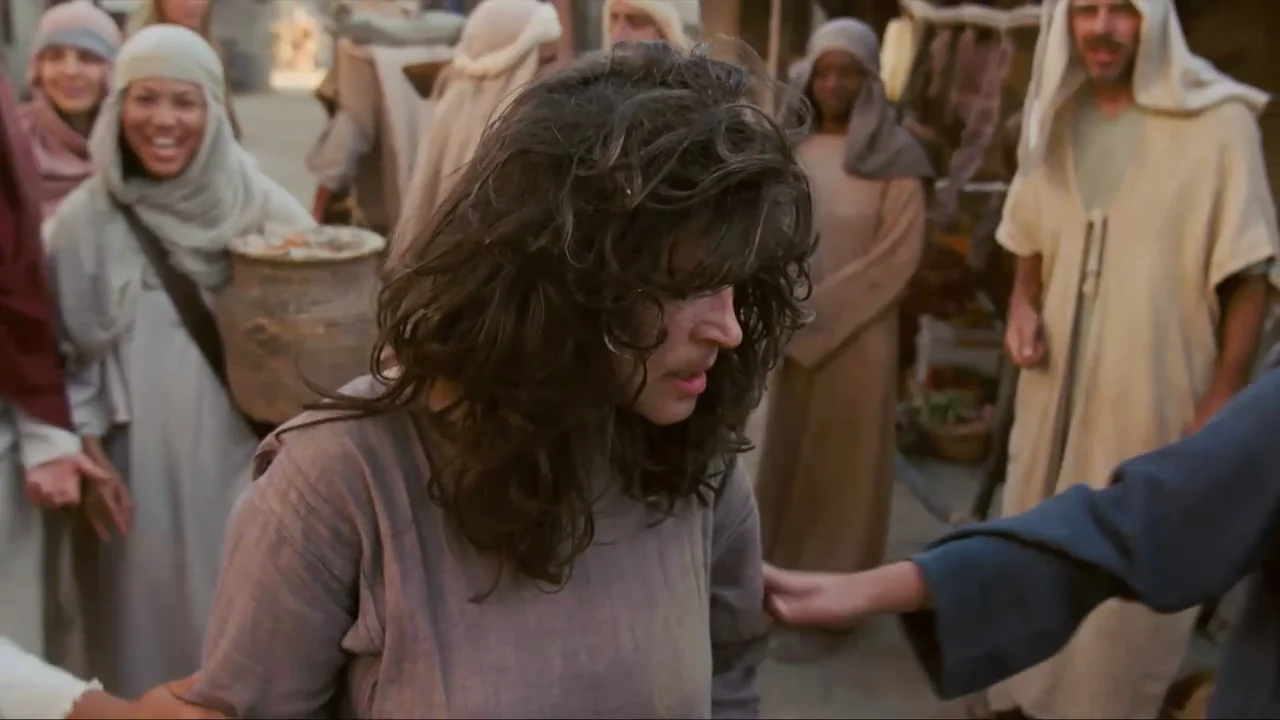
Deliverance also has a concrete human outcome. Luke describes Jesus commanding demons to leave a tormented man; they enter a herd of pigs. The man is subsequently found clothed and in his right mind at Jesus' feet. Jesus sends him home to tell what God has done for him (Luke 8:26–39). In Christian interpretation, the peace of this restored man expresses Jesus' compassion and gives meaning to the title Prince of Peace.
Compassion also shapes the feeding of the five thousand: Jesus welcomes the crowd, teaches about God's kingdom, heals those needing healing and provides food through his disciples (Luke 9:10–17). In another encounter, after the disciples have been unable to help a boy, Jesus heals him and gives him back to his father. The crowd responds with amazement at God's greatness (Luke 9:37–43). The boy's restoration returns him to his father's care.
The miracles also address authority to forgive. Mark records Jesus forgiving a paralytic's sins and healing him in an encounter that provokes both opposition and praise (Mark 2:1–12). Christians understand his authority to forgive sins as revealing his divinity. In John 10:38, Jesus asks those who do not believe him to consider his works so that they may recognize that the Father is in him and he is in the Father. [2]