Permission, preparation and the tomb
Joseph of Arimathea took responsibility for Jesus' burial after the crucifixion (Luke 23:50–53). Luke describes him as a good and upright member of the council who had not consented to its decision and action against Jesus (Luke 23:50–51). Matthew identifies him as wealthy (Matthew 27:57). His participation in the council therefore should not be confused with agreement with Jesus' condemnation. [1]
Joseph went to Pilate and asked for Jesus' body. Before granting the request, Pilate learned from the centurion that Jesus was dead; Joseph then received the body for burial (Mark 15:43–46). The sequence distinguishes Joseph's request from the governor's authorization: Joseph sought permission before taking charge of the body.
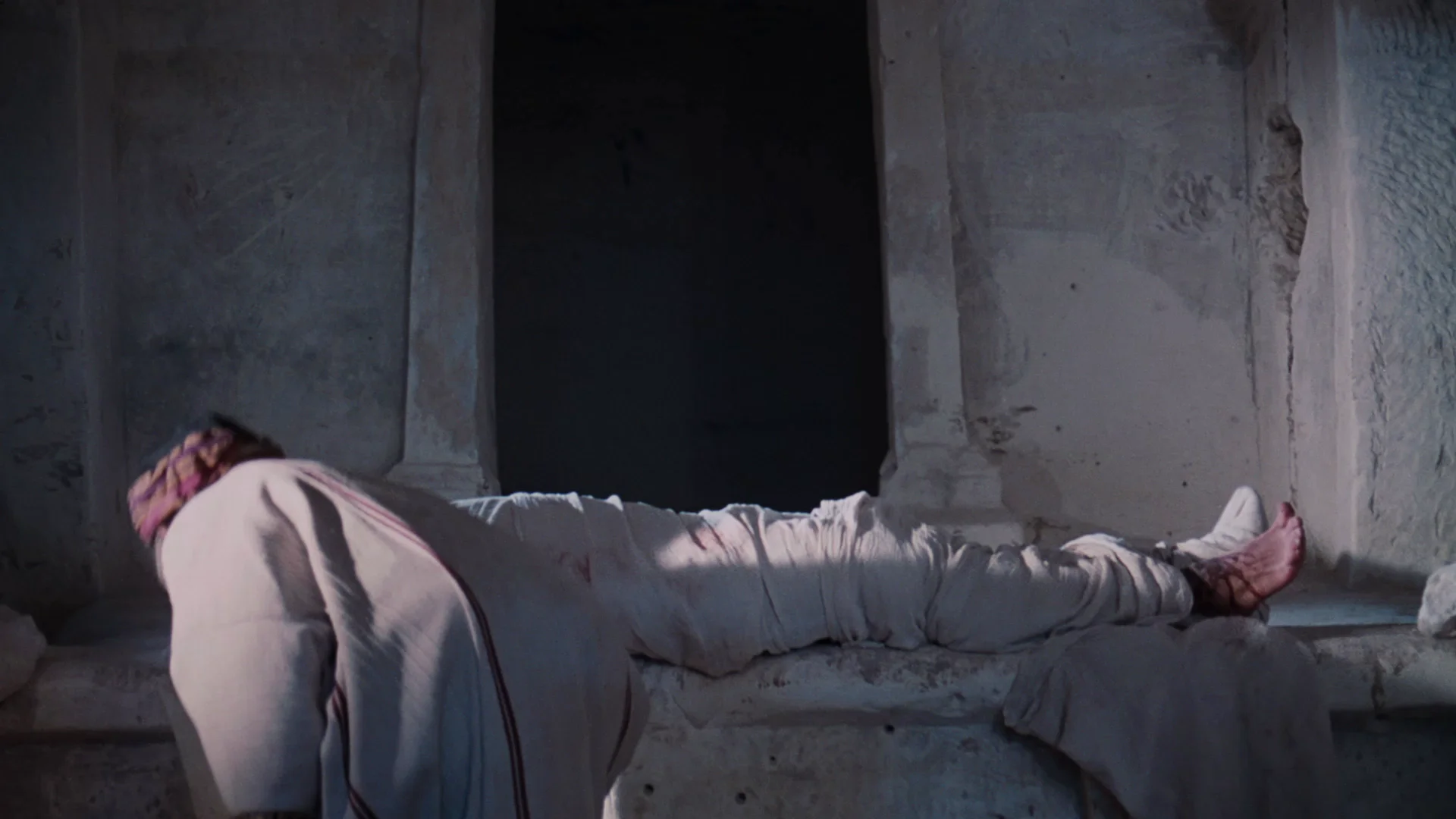
Nicodemus, whom John identifies as the man who had previously visited Jesus at night, brought a mixture of myrrh and aloes. Joseph and Nicodemus wrapped Jesus' body in linen with the spices, following Jewish burial custom (John 19:38–40). John gives the amount as about a hundred pounds (John 19:39). The spices and linen were part of preparing the body for burial; the account names both men as participants. [2]
Matthew records that Joseph wrapped the body in a clean linen shroud and laid it in his own new tomb, which had been cut into rock. He then rolled a large stone across the entrance and departed (Matthew 27:57–60). Jesus was thus placed in a prepared rock-cut burial chamber, with its entrance closed by a stone. [3]
John adds that there was a garden near the place of crucifixion and, within it, a new tomb where no one had yet been laid. He gives two reasons for placing Jesus there: it was the day of preparation for the Jewish Passover, and the tomb was nearby (John 19:41–42). Proximity mattered in the account's explanation of the burial's timing. [2]
The women who had accompanied Jesus from Galilee followed Joseph and watched where and how the body was laid. They then returned to prepare spices and perfumes. Luke places these actions before their Sabbath rest: after making the preparations, they rested according to the commandment (Luke 23:54–56). Their role included observing the burial and preparing for further care of the body.