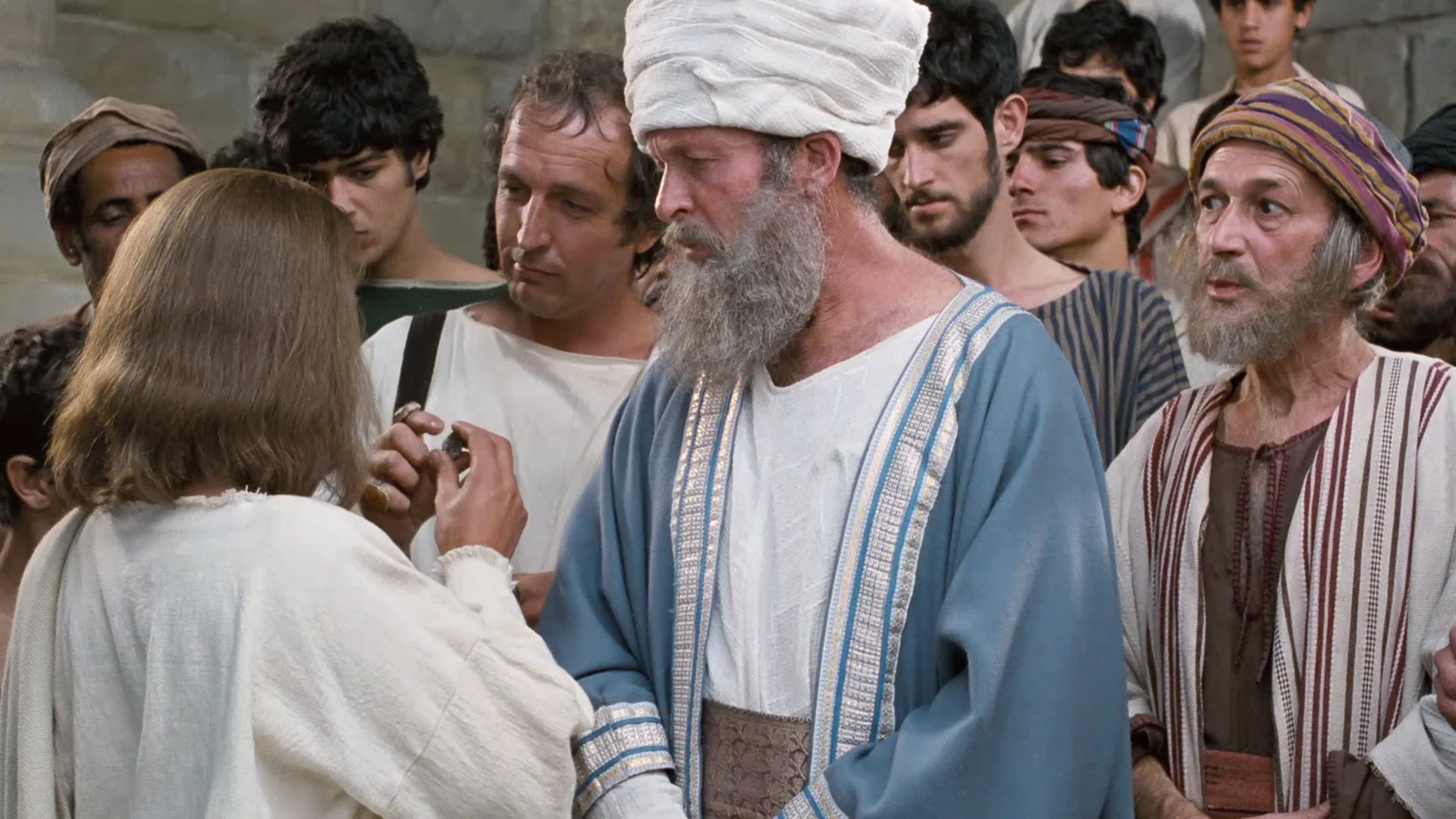
The coin and the obligation to God
The question about paying taxes was intended to entrap Jesus (Luke 20:20–26). One explanation of the dilemma is that approving the tax could alienate people who opposed Roman domination, while rejecting it could expose him to an accusation of rebellion. The questioners sought an answer they could turn against him; Jesus instead asked them to identify the image and inscription on a coin (Luke 20:20–26). [1]
Matthew records that Jesus recognized the questioners’ malice and requested the coin used for the tax. They brought a denarius. When he asked whose likeness and inscription it carried, the Pharisees and Herodians answered that it was Caesar’s. Jesus replied, “Therefore render to Caesar the things that are Caesar’s, and to God the things that are God’s.” His opponents marveled and left (Matthew 22:15–22). [2]
A Christian interpretation draws out the significance of the image: the coin carried Caesar’s imprint and could be used to pay civil taxes, while human beings bear God’s image and belong to him in their entirety. On this reading, Jesus moved beyond the question of money to the question of personal responsibility to God. Giving God his due involves the person’s life, service and obedience. [1]
Our Christian understanding is that followers of God have legitimate obligations to both government and God, with duty to God taking priority when the two conflict. Honoring government therefore has a place within faithful living, while government’s demands do not override responsibility to God. This interpretation preserves both parts of Jesus’ answer instead of allowing the tax question to eclipse its reference to God.
For Christian practice, paying what is owed has a concrete expression in Romans 13:6–7: Paul instructs his readers to pay taxes and revenue and to give respect and honor where they are due. Tax payment is thus a specific example of an obligation to governing authorities. Jesus’ reference to what belongs to God also requires attention to a responsibility that cannot be discharged simply by handing over a coin. [3]